In the Andes Mountains, the Sacred Valley of the Incas is a treasure trove of history and beauty. It’s near the famous city of Cusco and is full of Inca ruins, lively communities, and breathtaking views. Places like Ollantaytambo and Moray show us the amazing history of the Incas.

Key Takeaways
- The Sacred Valley of the Incas stretches over 60 miles, making it a vast and diverse region to explore.
- The area is home to numerous Inca archaeological sites, including the renowned Machu Picchu.
- The Sacred Valley played a crucial role in the rise of the Inca Empire, with the Incas developing sophisticated agricultural techniques to cultivate the land.
- Vibrant traditional communities in the Sacred Valley showcase rich Andean cultural heritage and artisanal traditions.
- The region offers a range of accommodation options, from luxury resorts to unique adventure suites, allowing visitors to immerse themselves in the Inca legacy.
- Ask for a comfortable and personalized itinerary to Peru (Free Service)
Cusco: Gateway to the Sacred Valley
Cusco was once the heart of the Inca Empire. It’s where most trips into the Sacred Valley start. This city is filled with amazing Inca ruins. They show us the incredible skills and beliefs of the ancient people.
Qorikancha: The Holiest of Holies
The Qorikancha was the most sacred temple of the Inca. It was covered in gold and honored the sun god Inti. Now, only some of the original stones are left, with a church built on top.
Visitors can see the old Inca foundations and sacred fountains. It’s a place that takes you back in time.
Sacsayhuamán: Gargantuan Inca Temple
Outside Cusco, you’ll find the huge ruins of Sacsayhuamán. This was a big Inca temple and fortress. Its walls, some as heavy as 300 tons, are arranged in a zig-zag pattern.
Sacsayhuamán was crucial for the Inca, both for worship and defense. Every year, it hosts the Inti Raymi festival to celebrate the winter solstice. From the top, you can see all of Cusco.
Q’enqo, Puka Pukará & Tambomachay
There are three more Inca sites near Cusco: Q’enqo, Puka Pukará, and Tambomachay. Q’enqo is famous for its carved limestone. Puka Pukará was a fortress. Tambomachay is a water temple with fountains and baths built by the Inca.
These sites show off the Inca’s amazing engineering and their spiritual beliefs.


Historical Sites in the Sacred Valley
The Sacred Valley of Peru is full of Inca history. It has many archaeological sites that show us the advanced civilization that lived here. You can see the famous Machu Picchu and the Moray terraced site, among others.
Ollantaytambo is a key Inca fortress in the Sacred Valley. It’s 80 kilometers from Cusco and sits at 2,700 meters high. This place was important for the Incas for military, religious, and farming needs. It still has Inca channels that work today.
The Royal House of the Sun has 17 big terraces looking out over the main square. The Temple of the Sun, made of six huge rocks, is still standing, even though a lot of it was destroyed.
| Inca Site | Significance | Highlights |
|---|---|---|
| Ollantaytambo | Military, religious, and agricultural center |
|
| Pisac | Stunning complex of stone temples |
|
| Moray | Terraced agricultural site |
|
Pisac is another amazing Inca site. It has a complex of stone temples and ruins. The Pisac Ruins show the Inca’s advanced engineering and city planning. The town of Pisac is also full of life and culture.
Moray is known for its terraced circles. These were likely used by the Incas to test different crops in various climates. It’s a unique place that shows the Inca’s farming skills.
Visiting the Sacred Valley is like stepping back in time. You can see the massive Ollantaytambo fortress, the detailed Inca stonework in Pisac, or the clever farming methods of Moray. It’s a place full of history and culture waiting for you to explore.
Machu Picchu: The Inca’s Most Famous Archaeological Site
Machu Picchu is a top spot in the Sacred Valley. It’s the Inca’s most famous and mysterious site. Located high in the Andes, it stands at 2,430 meters above sea level.
This place is a wonder of stonework and engineering. It has structures like the Torreón, Temple of the Sun, and Intihuatana calendar. These are aligned with the stars and planets.
Recent finds show Machu Picchu started in the 1420s, earlier than we thought. Getting there needs careful planning because tickets are limited. The site is huge, covering 32,592 hectares with over 200 structures.
Machu Picchu was left behind in the 16th century and found again in 1911. UNESCO gave it World Heritage status for its culture and nature. By 1976, 30% of it was restored.
The architecture fits right into the nature around it. Back when it was an estate, about 750 people lived there. They were supported by terraces that could feed over 1,000 families.
Machu Picchu’s history and beauty make it a top spot in Peru. With good planning and respect, visitors can dive into the Inca legacy.
Pisac: Ruins and Vibrant Market Town
Pisac is a town in Peru’s Sacred Valley, known for its Inca ruins and lively Sunday market. It sits at 2,900 meters high. This place lets visitors see the Inca civilization’s architecture and culture.
Pisac Ruins: A Complete Inca City
The Pisac Ruins are a key site in the Sacred Valley. They are one of the most complete Inca cities left. The site has areas for farming, homes, and ceremonies.
Visitors can explore the ruins’ many terraces, temples, and an Inca cemetery carved into the cliffs. The ruins stretch almost a kilometer, showing off Inca engineering and city planning.
This site was key to the Inca empire because of its location on a mountain. It was safe and great for farming.
Getting to the ruins is a hike that takes about 90 minutes from town. Make sure you’re used to the high altitude before you go. Be careful in the rainy season, as the paths can be slippery.
Pisac town is full of Andean culture, especially on Sundays. The market draws people from everywhere. You can find local crafts, food, and traditional Peruvian items.
Pisac is a top spot in Peru’s Sacred Valley. It has history, culture, and beauty. Whether you like ruins or markets, Pisac is a place you should see.
Moray: The Agricultural Laboratory of the Incas
Moray is a unique Inca site in the Sacred Valley, known as the “Agricultural Laboratory of the Incas.” It has terraced structures that the Inca used to test different climates and crops. These structures helped the Inca learn which plants grew best in various conditions. This site shows how advanced the Inca’s farming was.
Moray sits high up at 11,500 feet above sea level. It has circular terraces with a smart irrigation system. The temperature can change by 27 degrees from top to bottom. The biggest terrace is 600 feet wide and has 12 levels.
The weather at Moray is pretty steady all year. Days are warm, between 65-70°F, and nights are cooler, from 30-50°F. The area has a dry season from April to October and a rainy season from November to March.
Until the 1970s, farmers worked at Moray. Then, the National Institute of Culture took over to make it a tourist spot. Now, it’s seen as a key place to study how altitude and temperature affect crops.
There are salt mines near Moray with over 3,000 ponds. Salt has been harvested here since before the Incas. Moray is near the Andes, perfect for activities like horseback riding and biking to places like Maras.
sacred valley historical sites
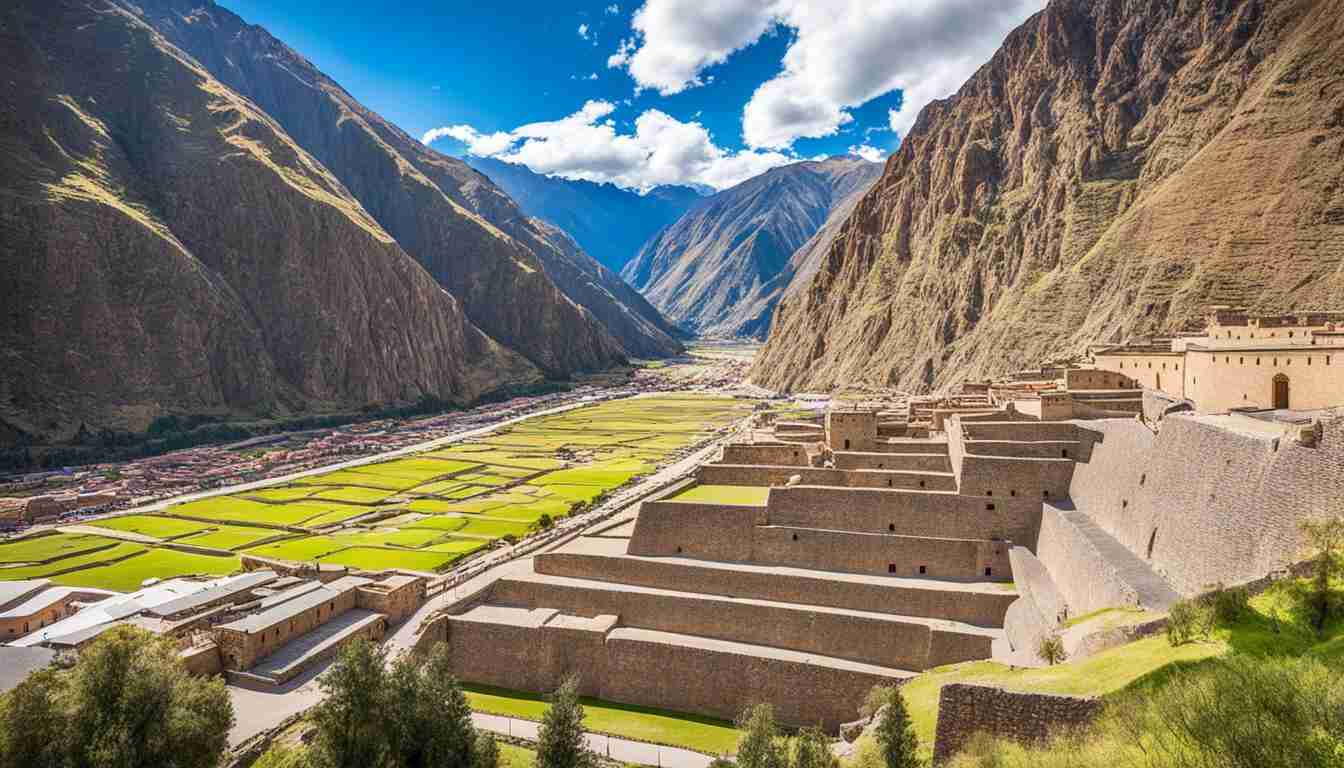
In the heart of Peru’s Sacred Valley, Ollantaytambo is a well-preserved Inca fortress town. It shows off the Inca’s advanced city planning and architecture. The town’s design and stone buildings connect us to the past, letting us feel the history of ollantaytambo, inca fortress, and the sacred valley.
Ollantaytambo’s ruins have huge stone temples, strong walls, and big andenes terraces. These terraces were key for growing food and show the Incas’ deep knowledge of water and soil. Visitors can walk the streets, see the big stone buildings, and understand the Inca’s amazing building and engineering skills.
Ollantaytambo was the last stop on the famous Inca Trail before reaching Machu Picchu. Its location helped the Incas keep control of the sacred site and protect against enemies. Now, it’s a key spot for those starting the Inca Trail, offering a chance to see the Inca civilization up close.
“Ollantaytambo is a window into the past, where the ancient Inca way of life is preserved in its remarkable architecture and layout.”
If you love history, nature, or cultural experiences, you must visit Ollantaytambo in the sacred valley. See the inca fortress town, admire the Incas’ creativity, and let the stories of this amazing place take you away.
Saqsayhuaman: Colossal Fortification Walls
Overlooking Cusco is the site of Saqsayhuaman, famous for its colossal Inca fortification walls. The massive stones, some over 300 tons, amaze visitors. It was crucial for the Inca as a religious and military site. Now, it’s where the Inti Raymi festival happens every year, celebrating the winter solstice. Seeing the ruins and the views of Cusco from the hill is a must.
Saqsayhuaman sits at 3,701 meters high, making it a breathtaking spot. Both Cusco and Saqsayhuaman are UNESCO World Heritage Sites since 1983. People first settled here around 900 CE. The Incas built it in the 15th century, during the reign of Sapa Inca Pachacuti.
The biggest stones weigh between 128 to almost 200 tonnes. The three big walls are 6 meters tall and 400 meters long together. They used over 6,000 cubic meters of stone. The stones fit together so well, a piece of paper won’t fit between them, showing the Inca’s skill.
| Saqsayhuaman Facts | Details |
|---|---|
| Altitude | 3,701 meters (12,142 feet) |
| UNESCO World Heritage Site | Designated in 1983 |
| Earliest Occupation | Approximately 900 CE |
| Constructed by Incas | 15th century, under Sapa Inca Pachacuti |
| Largest Stone Weight | 128 to 200 tonnes |
| Terrace Wall Dimensions | 6 meters tall, 400 meters long |
| Total Stone Volume | Over 6,000 cubic meters |
The Incas moved stones about 35 km from Rumicolca to build Saqsayhuaman. After the Spanish conquest, much was taken apart for Spanish Cusco. Yet, Saqsayhuaman still stands as a marvel of Inca architecture.
Classic Inca Trail: Trekking Through History
Trekking the Classic Inca Trail to Machu Picchu is a dream for many visiting Peru. This four-day hike takes you through the Sacred Valley, connecting Inca archaeological sites to the famous citadel. You’ll cross the high-altitude Dead Woman’s Pass and see the ruins of Wiñay Wayna.
This trail lets you dive deep into the history and beauty of the Inca Empire. It ends with the amazing arrival at Machu Picchu. The most popular way to experience it is the 4-Day Classic Inca Trail, followed by the 2-day Short Inca Trail.
It’s crucial to plan your trip early as popular months can book up to 6 months ahead. The Inca Trail Permit System limits daily permits, so booking early is key.
- The Inca Trail to Machu Picchu takes 3 to 5 days, with the 4-day trek being the most chosen.
- For those short on time, the 2-day Inca Trail is perfect. Longer treks of 4, 5, and 7 days offer deeper experiences and more archaeological sites.
- Huaynapicchu and Machu Picchu Mountain hikes are special. They give amazing views of Machu Picchu but need permits.
- Ollantaytambo is a good place to get used to the high altitude before going to Cusco.
The Classic Inca Trail is a mix of adventure, history, and nature. You’ll see Inca ruins like Wiñay Wayna and reach the iconic Machu Picchu. It’s a journey of discovery and beauty.
Sacred Valley Villages
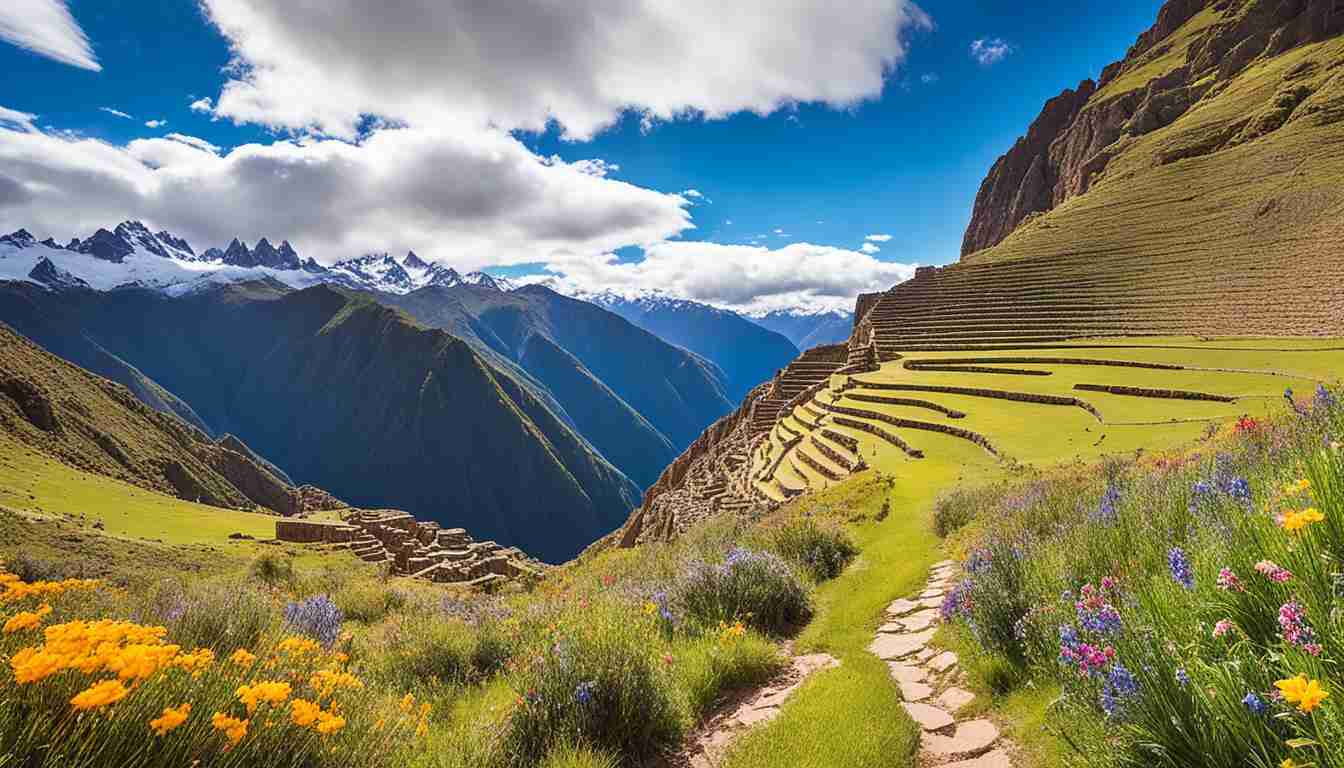
The Sacred Valley of Peru is filled with villages that show off their unique culture and history. Places like Pisac and Ollantaytambo let visitors see the Andean world of the Incas. These spots are full of life and history.
Pisac: Market and Ruins
Pisac is a center of Andean culture, famous for its Sunday market and Inca ruins. The market is full of local crafts, produce, and textiles. Vendors sell handmade goods and traditional Peruvian items.
The ruins of Pisac sit high above the town. They are some of the best-preserved Inca ruins in the Sacred Valley. They show different areas for farming, living, and ceremonies.
Ollantaytambo: End of the Road
Ollantaytambo is a key town in the Sacred Valley, right before the train to Machu Picchu. Its Inca-era design and buildings are still standing, showing how the Inca planned their towns. The town has big Inca ruins, like a huge fortress and many farming terraces.
Urubamba: Luxury Resorts and Culinary Scene
Urubamba is a place of luxury and relaxation, without big Inca ruins. It has many high-end resorts and hotels for travelers. The town is also known for its growing food scene, with top restaurants that use Peruvian ingredients and traditional cooking.
Chinchero: Weaving Traditions
Chinchero is famous for its long Andean weaving traditions. On Sundays, a busy market happens where artisans sell their textiles. Visitors can see weavers at work and check out the Inca ruins and a 16th-century church.
Conclusion
The Sacred Valley of the Incas in Peru is a top spot for history, archaeology, and Andean beauty lovers. It goes from Cusco to Machu Picchu, filled with Inca ruins, local culture, and amazing mountains. Sites like Ollantaytambo, Pisac, and Moray let you see the advanced Inca civilization.
This valley is known as the “Valley of the Incas” for its huge ruins and terraced fields. They show the Incas’ amazing building skills and how they lived in harmony with nature. Tour companies like Peru For Less work with local communities to share their traditions. You can learn about textile making in Chinchero and the mix of old and new in Peruvian food.
The Sacred Valley has over 200 structures, like baths, homes, temples, and sanctuaries. It’s also famous for its salt mines in Maras. Visitors can explore famous sites or dive into local culture. Everyone leaves with a new respect for the Inca Empire’s lasting legacy.