Machu Picchu, an iconic Inca citadel in the Andes, is a dream spot for trekkers and adventurers. This guide will show you the best ways to see Machu Picchu on foot. You’ll learn about the famous Inca Trail and other routes that offer special views of this UNESCO World Heritage Site. It’s perfect for solo travelers or groups, making your Machu Picchu trip unforgettable.

Key Takeaways
- Discover the most popular trekking routes to Machu Picchu, including the classic four-day Inca Trail trek
- Learn about the history, geography, and significance of the Machu Picchu ruins
- Explore the best times to visit Machu Picchu and understand the weather and climate considerations
- Understand the different transportation options for reaching Machu Picchu, from trains to trekking
- Get insights into the Machu Picchu permits and regulations to plan your visit
- Contact us for a comfortable and personalized itinerary (Free Service)
Introduction to Machu Picchu
Machu Picchu is a legendary Inca citadel in the Andes Mountains of Peru. It shows the amazing skills of the Inca Empire. Built around 1450 AD, it was likely the home of the powerful Inca king, Pachacuti.
This site is famous for its stunning architecture and advanced building methods. It’s a UNESCO World Heritage Site and one of the New Seven Wonders of the World.
History and Significance of Machu Picchu
Machu Picchu has a rich history and cultural importance. It was a sacred place for the Inca, a spot of religious and political power. The Inca elite used it as a retreat.
The site shows the Inca’s deep bond with nature. It’s perfectly placed among the Andes and greenery. Today, it’s seen as a wonder of the pre-Columbian world for its architecture, astronomy, and engineering.


Geography and Location of Machu Picchu
Machu Picchu is in the Cusco Region of Peru, high up in the Andes Mountains. It’s above the Urubamba River valley. Its beautiful setting, with tall peaks and green forests, adds to its charm.
The Inca built the citadel to blend with the Andean landscape. This shows their respect for nature. It makes Machu Picchu a place of wonder and harmony.
When to Visit Machu Picchu
Choosing the right time to visit Machu Picchu makes your trip unforgettable. The best time to visit Machu Picchu is from late March to May and from September to mid-December. These months offer nice weather, fewer people, and lower prices than the busy June, July, and August.
Best Time to Go to Machu Picchu
The busiest time at Machu Picchu is in June, July, and August. These months are packed with tourists. But, late March to May and September to mid-December are quieter. They have mild weather and fewer visitors.
Weather and Climate Considerations
Machu Picchu has only two seasons: dry from May to September and wet from November to April. The dry season has clear skies and warm days, around 20-21°C (68-70°F). Nights can get cold, between 2-8°C (35-46°F).
The wet season brings more rain, from 9 mm (0.5 inches) in May to 154 mm (6 inches) in January. It can also be foggy in May and June. Always wear layers to stay comfortable with Machu Picchu’s changing weather.
“The best time to hike Machu Picchu is in the shoulder months of the dry season, late April to early May and late September to early October.”
Getting to Machu Picchu
Train Options and Routes to Machu Picchu
Train travel is a top choice to get to Machu Picchu. Trains leave from Cusco, Ollantaytambo, or Urubamba and end in Aguas Calientes at the mountain’s base. The Vistadome train is budget-friendly and offers great views. The Expedition and Hiram Bingham trains offer luxury. The trip takes about 3.5 hours one-way.
Trekking the Inca Trail to Machu Picchu
The 4-day, 3-night Inca Trail trek is a dream for adventurers. It’s a tough but fulfilling hike through beautiful Andean landscapes. Trekkers enter Machu Picchu through the Sun Gate. If you can’t get an Inca Trail permit, try the Salkantay or Lares trails instead.
The Inca Trail is best for those who are fit and can handle high altitudes and steep paths. It offers a deep connection to the ancient Inca citadel.
| Trail | Duration | Difficulty Level |
|---|---|---|
| Inca Trail | 2-4 days | Challenging |
| Salkantay Trek | 4-7 days | Moderate to Challenging |
| Lares Trek | 4 days | Moderate |
| Choquequirao Trek | 8 days | Challenging |
The train ride to Machu Picchu takes 1.5 to 4.5 hours, depending on where you start. The Inca Trail can be done in two or four days. Other treks like Salkantay, Lares, or Choquequirao take four days or more. Looking at the machu picchu train options and inca trail to machu picchu can help you pick the best way to visit this famous place.
Machu Picchu Trekking Routes
There are more ways to get to Machu Picchu than just the famous Inca Trail. Each route offers a special way to see Inca ruins, beautiful Andean views, and dive into the area’s rich culture.
Salkantay Trek
The Salkantay Trek is a 5-day, 4-night adventure through the Andes. It covers 72km and takes you past Mount Salkantay, one of the highest peaks in Cusco. Then, you’ll go down into the lush cloud forests and finally reach Machu Picchu.
Inca Jungle Trek
The Inca Jungle Trek is a mix of hiking, biking, and rafting over 4 days and 3 nights. It’s an exciting way to see Inca ruins, bike through mountains, and go rafting on the Urubamba River. You’ll end up at Machu Picchu.
These routes offer a way to see machu picchu hiking trails without the crowds of the Inca Trail. Each trek has its own level of difficulty, distance, and time. They suit different fitness levels and what you want from your trip.
| Trek | Distance | Duration | Difficulty |
|---|---|---|---|
| Inca Trail | 40km | 4 days, 3 nights | Moderate to Challenging |
| Salkantay Trek | 72km | 5 days, 4 nights | Challenging |
| Lares Trek | 33km | 2-3 days, 1-2 nights | Moderate |
| Inca Jungle Trek | Variable | 4 days, 3 nights | Moderate to Challenging |
When planning your machu picchu hiking trails trip, think about your fitness, time, and what you want to experience. This way, you’ll pick the best treks to machu picchu for you.

Exploring the Machu Picchu Ruins
Visiting Machu Picchu with a knowledgeable guide is a great way to learn about its history and importance. Guided tours show you important spots like the Temple of the Sun and the terraced gardens. Guides share stories about the Inca’s architecture and how the site was a celestial observatory. For a more personal adventure, self-guided exploration lets you wander and find hidden spots at your own pace.
Guided Tours of Machu Picchu
Guided tours of Machu Picchu give you a full and deep experience. Machu Picchu tour guides know a lot about the site’s history, culture, and importance. They take you to famous places like the Temple of the Sun, the Intihuatana Stone, and the beautiful terraced gardens.
Self-Guided Exploration of Machu Picchu
Exploring Machu Picchu by yourself lets you enjoy the peaceful setting and focus on what interests you most. Self-guided tours let you move at your own pace, making the experience personal and memorable. You can hike to the top of Huayna Picchu or find hidden spots in the citadel, making your visit truly unique.
“The journey to Machu Picchu is as much a part of the experience as the ruins themselves. Whether you choose a guided tour or self-guided exploration, the sense of discovery and wonder is truly unparalleled.”
Accommodations Near Machu Picchu
Finding the perfect place to stay near Machu Picchu is key to a memorable trip. Travelers have many hotels near machu picchu and where to stay in machu picchu choices. These options fit different budgets and tastes.
Aguas Calientes, at the foot of Machu Picchu, has many places to stay. The Inkaterra Machu Picchu Pueblo Hotel is a top choice. It’s elegant, surrounded by greenery, and offers a deep dive into local culture.
For a relaxed visit to the Machu Picchu area, consider hotels in Cusco and the Sacred Valley. They’re near train stations, making it easy to get to Machu Picchu. The Palacio del Inka, a Luxury Collection Hotel in Cusco, is a great example. It lets visitors soak in the local culture and history.
No matter your budget, there are hotels near machu picchu and where to stay in machu picchu for you. You can pick from cozy hostels to fancy resorts. The choices near this amazing site are varied and welcoming.
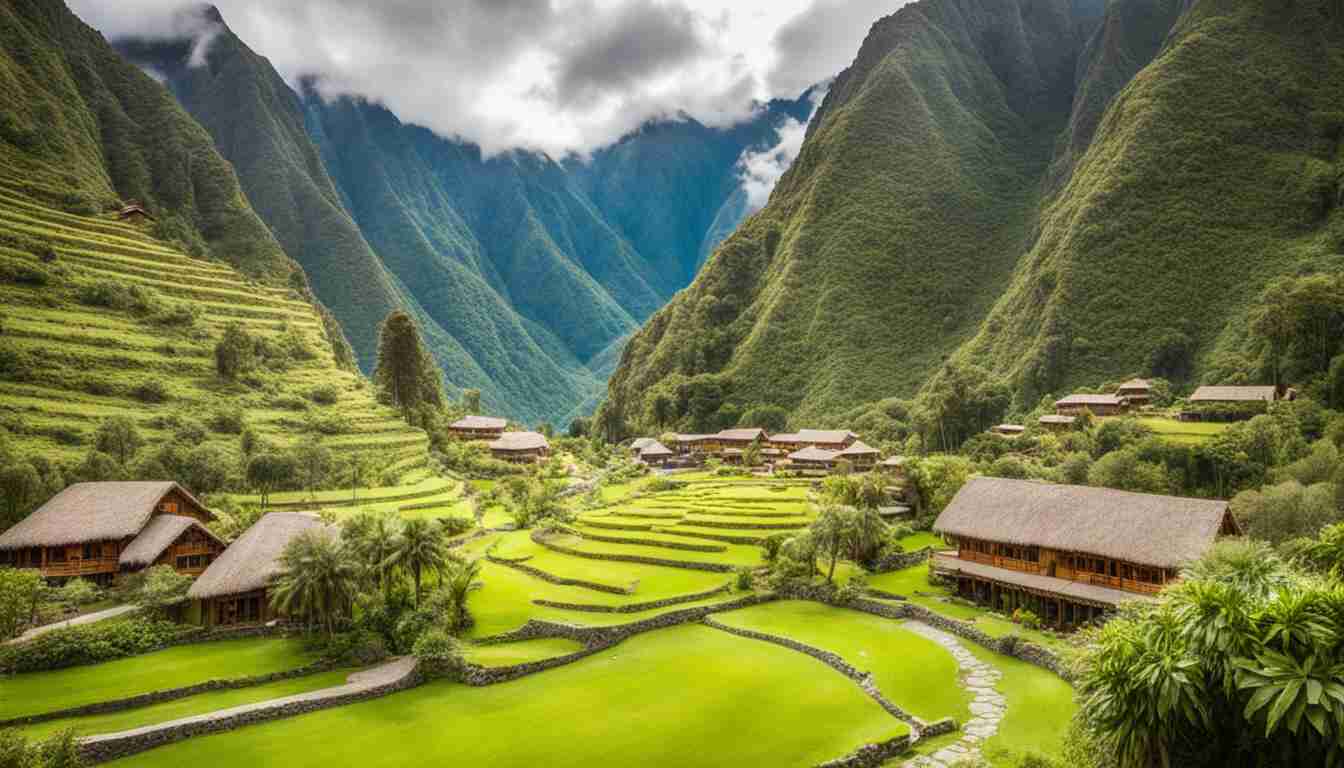
“The journey to Machu Picchu is as much a part of the experience as the destination itself.” – Peruvian Explorer
What to Bring and Prepare for Machu Picchu
Getting ready and packing right is key for a great trip to Machu Picchu. You can only bring one backpack or bag that weighs under 8 kilos (17.6 lbs) for the train and at the site. Having the right machu picchu packing list and being in shape for the machu picchu trek is crucial to enjoy this amazing place.
Packing Essentials for Machu Picchu
For what to bring to machu picchu, focus on packing light but smart. You’ll need comfy, moisture-wicking clothes, strong hiking shoes, waterproof layers, sun protection, and any needed medicines. If you’re hiking the Inca Trail, don’t forget a good backpack, trekking poles, and thermal layers.
- Comfortable, breathable clothing
- Sturdy hiking boots or shoes
- Waterproof jacket and pants
- Sun hat, sunglasses, and sunscreen
- Insect repellent
- Water bottle and snacks
- Headlamp or flashlight
- First aid kit
- Any necessary medications
Physical Preparation for Machu Picchu Treks
It’s vital to get in shape before visiting Machu Picchu because of the high altitudes. Peru’s average elevation is 5,102 feet, with Cusco at 11,152 feet. Experts say spending a few nights at 8,000-9,000 feet helps get used to the altitude before the trek. Regular exercise also helps trekkers enjoy the machu picchu trek preparation and the ruins.
| Preparation Tip | Percentage of Trekkers |
|---|---|
| Engage in cardio exercises 3-4 times a week | 90% |
| Focus on strength training with bodyweight exercises | 75% |
| Train by hiking regularly on challenging trails | 65% |
| Prioritize acclimatization by spending time in Cusco | 85% |
Being in shape for machu picchu makes the journey comfortable and unforgettable.
The Iconic Inca Trail to Machu Picchu
Starting the inca trail to machu picchu itinerary is a dream for many who love adventure. This 4-day, 3-night inca trail trek day by day takes you through the Andes. You’ll visit Incan sites and end at the amazing Machu Picchu ruins.
Day-by-Day Itinerary for the Inca Trail Trek
- The first day is easy, with a walk to Inca ruins and ending at the Huayllabamba campsite.
- The second day is tough, with a steep climb to the “Dead Woman’s Pass” and then down to Pacasmayo campsite.
- Day three is a mix of going up and down, through cloud forests and ruins, to the final campsite.
- On the last day, you start early to reach the Sun Gate and see the sunrise over Machu Picchu. Then, you explore the ancient citadel.
The inca trail to machu picchu itinerary is tough but very rewarding. It offers beautiful views, a chance to see the culture, and the chance to conquer Andean peaks.
“Hiking the Inca Trail is a transformative experience that connects you to the rich history and breathtaking beauty of the Andes.”
Alternative Treks to Machu Picchu
The Inca Trail is a famous way to get to Machu Picchu, but there are other paths for adventurous travelers. The salkantay trek to machu picchu and inca jungle trek to machu picchu are great choices. They let you see the Andes and Inca ruins without the crowds.
The Salkantay Trek is a 5-day trip that goes through the Andes. You’ll see glacial peaks and cloud forests before reaching Machu Picchu. It’s 32 miles long and goes up to 15,090 ft high, offering amazing views.
The Inca Jungle Trek is a 4-day adventure that mixes hiking, biking, and rafting. It’s a thrilling way to see Machu Picchu, focusing on the cloud forests and ruins.
These treks are perfect if you can’t get Inca Trail permits. They’re flexible and let you make your own plans. Whether you pick the salkantay trek to machu picchu or the inca jungle trek to machu picchu, you’ll have an amazing time in the Andes.
“The alternative treks to Machu Picchu offer a unique and adventurous way to experience the stunning landscapes and Inca ruins without the crowds of the Inca Trail.”
| Trek | Duration | Distance | Peak Elevation | Permit Required | Porters/Pack Animals |
|---|---|---|---|---|---|
| Salkantay Trek | 5 days/4 nights | 32 miles (51 km) | 15,090 ft (4,600 m) | No | Porters available up to Day 4 |
| Lares Trek | 4 days/3 nights | 21 miles (34 km) | 14,600 ft (4,450 m) | No | Pack animals available through Day 3 |
| Lares + 2-day Inca Trail | 4 days/3 nights | 28 miles (46 km) | 14,600 ft (4,450 m) | Yes, for Inca Trail portion | Pack animals available on days 1 & 2 |
Machu Picchu Permits and Regulations
Visiting Machu Picchu means dealing with a set of rules and permits from the Peruvian government. They limit the number of visitors each day to protect this ancient site. So, planning ahead and booking early is key.
The Inca Trail is a top way to get to Machu Picchu, but it has only 200 permits for trekkers each day. There are also 300 for guides, porters, and staff. These permits can’t be changed or refunded and have specific dates and names. The trail is shut down in February for upkeep.
Getting an Inca Trail permit can be tough, especially for popular dates. Booking with a trusted tour operator like Peru for Less can help. They have a 99% success rate in getting permits.
| Permit Type | Cost | Availability |
|---|---|---|
| Short 2-Day Inca Trail | Around $200 | Limited |
| Classic 4-Day Inca Trail | Upwards of $500 | Highly Competitive |
All visitors to Machu Picchu must follow strict rules. Since 2017, you need an authorized guide and to be in a group to enter. There are also rules about bag size, what you can’t bring, and where you can go in the ruins.
Planning well and following the machu picchu permits and machu picchu regulations is key for a smooth trip. Knowing these rules helps make your visit to Machu Picchu unforgettable.
“Booking a tour with a certified operator is essential, as they handle all the necessary permits and paperwork.”
Conclusion
Machu Picchu is a dream trip for many, offering a deep dive into history and nature. You can hike the famous Inca Trail or go it alone. This guide has given you the best machu picchu trekking tips, how to get there, where to stay, and how to prepare. With good planning and a sense of adventure, you’ll make memories that last a lifetime at this ancient Incan site.
When planning a machu picchu trip, booking early is key, especially in the busy season. The Inca Trail is a top pick, but there are other paths that are less crowded and just as beautiful. Machu Picchu Gateway can make your trek easier, offering great service, comfy places to stay, and tasty food.
Whether you tackle the Inca Trail or see Machu Picchu on your own, it will be an experience you won’t forget. By diving into the history and beauty of the place, you’ll understand the Incan culture better. With the right planning and a brave spirit, your trip to this amazing site will be unforgettable.